
Learning how to fly internationally with a dog feels completely terrifying the first time you look at the paperwork mountain. Your heart races as you imagine border agents turning you away while your pup whimpers in their carrier. Taking your best friend across the globe requires precise timing and patience, but thousands of pet parents do it every single week. You can absolutely pull this off without losing your mind.
Research Country Import Rules and Pet Entry Laws
Researching destination laws months in advance prevents border disasters and painful quarantines. Every nation establishes unique rabies risk categories, entry permits, and health protocols. Island nations like the United Kingdom, Australia, New Zealand, and Japan enforce strict biosecurity rules that demand months of preparation or specific entry ports.
Continental Europe, by contrast, operates under a standardized pet scheme that makes border crossings relatively straightforward for healthy animals. Always consult the official agricultural ministry website of your destination country rather than relying on secondhand forum advice. Finding the exact destination country entry requirements early gives you the runway you need to schedule blood tests, secure import permits, and avoid emergency cancellations.
Implant an ISO Microchip and Complete Required Vaccinations
Chronological order matters more than anything else during the initial veterinary preparation phase. Your dog must receive an ISO 11784/11785 compliant 15-digit microchip before or on the exact same day as their primary rabies vaccination. If a veterinarian administers the rabies vaccine prior to scanning or injecting that specific microchip, foreign agricultural authorities will invalidate the vaccination record on arrival.
Certain rabies-free countries also require a rabies titer blood test to confirm antibody levels. The vet draws blood at least thirty days after vaccination and sends the sample to an approved laboratory like Kansas State University. Many destinations enforce a mandatory waiting period of three to six months after this blood draw before your pet can enter, so start this step immediately.
Secure the USDA Health Certificate and Endorsement
When you research how to fly internationally with a dog, paperwork deadlines will test your nerves during the final month. You must book an appointment with a USDA-accredited veterinarian who understands international export forms. Most foreign governments mandate that this clinical health exam happens within ten to fourteen days of your departure flight.
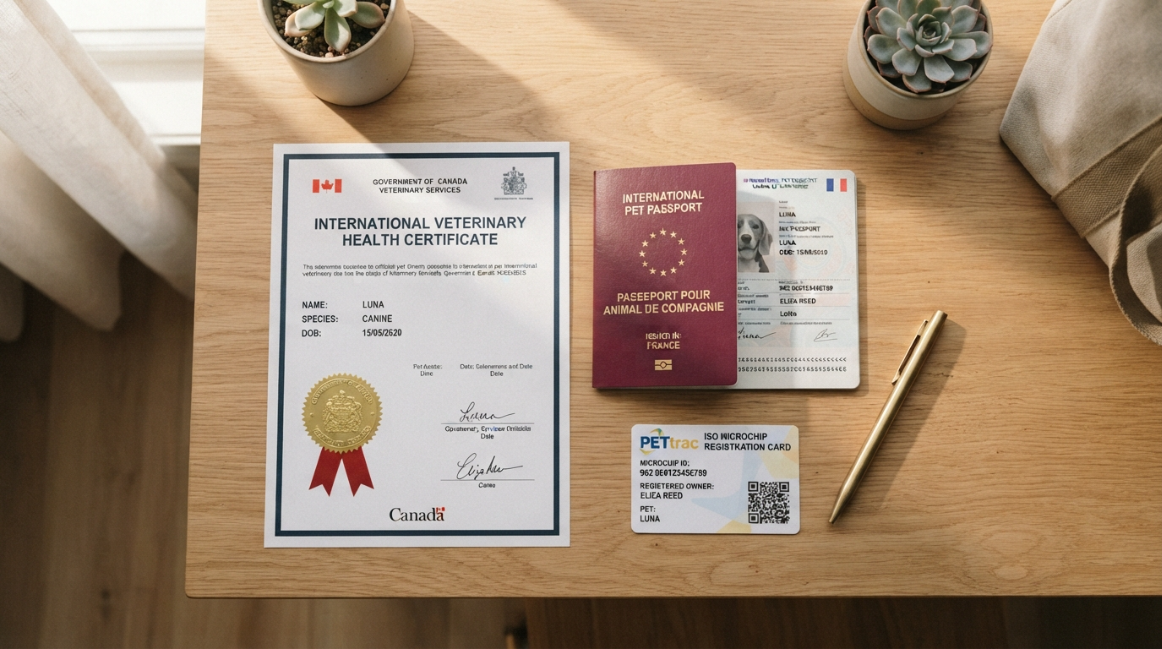
Your accredited vet completes the paperwork and submits it electronically through the USDA Veterinary Export Health Certification System. A federal veterinary officer then reviews the submission, verifies rabies dates, and applies an official USDA health certificate endorsement to validate the document. You receive the certified paperwork either digitally or via overnight courier with an embossed physical stamp that you must guard with your life.
How to Fly Internationally with a Dog: In-Cabin vs Manifest Cargo
Size dictates the physical route your pet takes across oceans and continents. Small dogs weighing under fifteen to twenty pounds can usually fly inside the passenger cabin under the seat directly in front of you. Larger dogs must travel in the temperature-controlled, pressurized cargo hold as manifest cargo or checked excess baggage.
Airlines like Air France, KLM, and Lufthansa maintain outstanding reputations for animal care and operate climate-controlled transit facilities in their European hubs. Certain countries, including the United Kingdom and United Arab Emirates, prohibit any pets from arriving inside the passenger cabin, forcing all animals into manifest cargo regardless of size. Checking specific airline pet travel policies prevents nasty surprises at the check-in desk on departure day.
Reserve Your Dog’s Flight Ticket Early and Pick Direct Routes
Waiting until the last minute to book a pet space on your flight is a massive gamble. Airlines strictly cap the number of animals allowed in the cabin, often limiting reservations to just two to four pets per flight. Always call the airline reservation desk to secure your dog’s ticket before you purchase your own seat.
Opt for non-stop direct flights whenever they are available, even if the ticket costs a little more. Direct routes eliminate the hazards of missed connections, lost baggage transfers, and tarmac temperature delays during mid-journey layovers. If a layover is unavoidable, ensure you have at least three hours between flights to account for transfer buffers and quick bathroom breaks.
Buy and Acclimate to an IATA-Approved Carrier
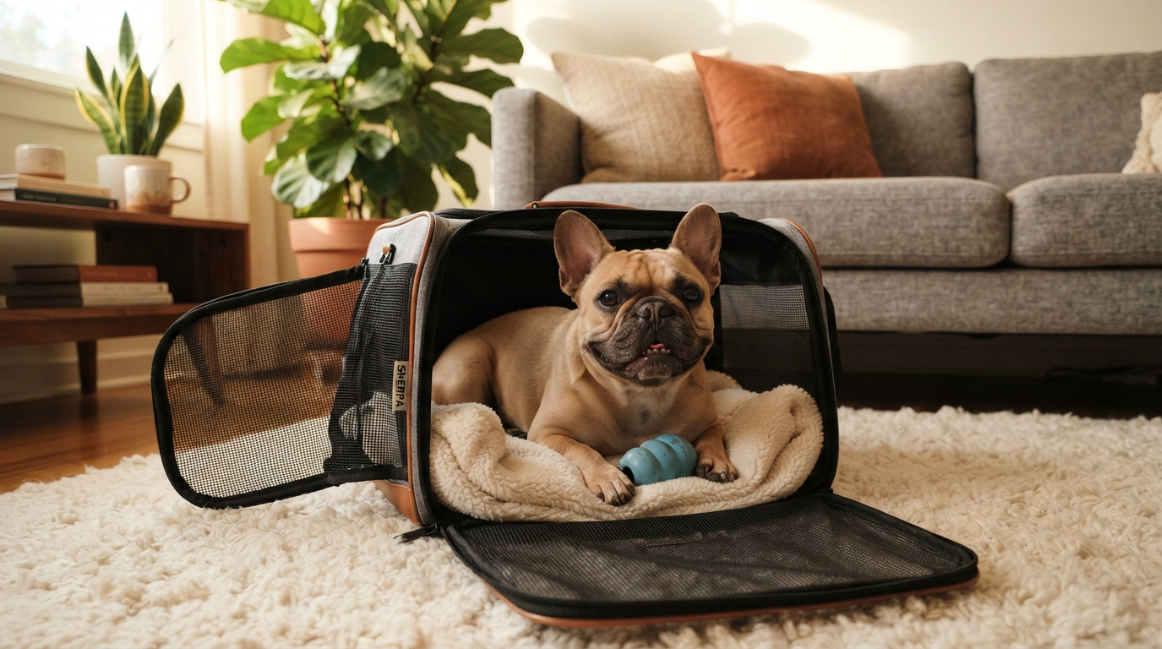
Acclimating your dog to their travel carrier months beforehand builds genuine confidence and minimizes travel anxiety. Cabin travelers need a durable, soft-sided carrier like a Sherpa Original Deluxe or Sleepypod Air that compresses slightly under airplane seats while maintaining ventilation. Cargo travelers require rigid plastic crates secured with metal bolts, exterior food dishes, and no wheels.
Make sure your hard crate complies fully with IATA live animal regulations, which state your dog must stand, sit erect, turn around easily, and lie down in a natural position. Place the open carrier in your living room with a familiar blanket, scattering high-value treats inside every afternoon. Your dog should view the crate as a safe den long before you arrive at a noisy airport terminal.
Assemble an Airport Survival and Document Kit
Mastering how to fly internationally with a dog also depends on having the right supplies close at hand during transit. Print two complete sets of physical records, including your endorsed health certificate, rabies vaccination certificates, microchip confirmation, and import permits, placing them inside a waterproof folder.
Pack collapsible silicone bowls, a gallon ziplock bag of regular kibble, prescription medications, waste bags, and pet-safe disinfectant wipes. Attach two separate identification tags to your dog’s collar showing your destination address and international phone number. Using a hands-free waist leash keeps your hands free to handle passports, luggage carts, and customs paperwork without losing control of your dog in crowded terminals.
Clear Airport Security and Find Pet Relief Areas
Airport security protocols require you to remove your dog from their carrier so the empty bag can pass through the X-ray scanner. Put your dog on a non-metallic leash and hold them securely in your arms or walk them right beside you through the walk-through metal detector.
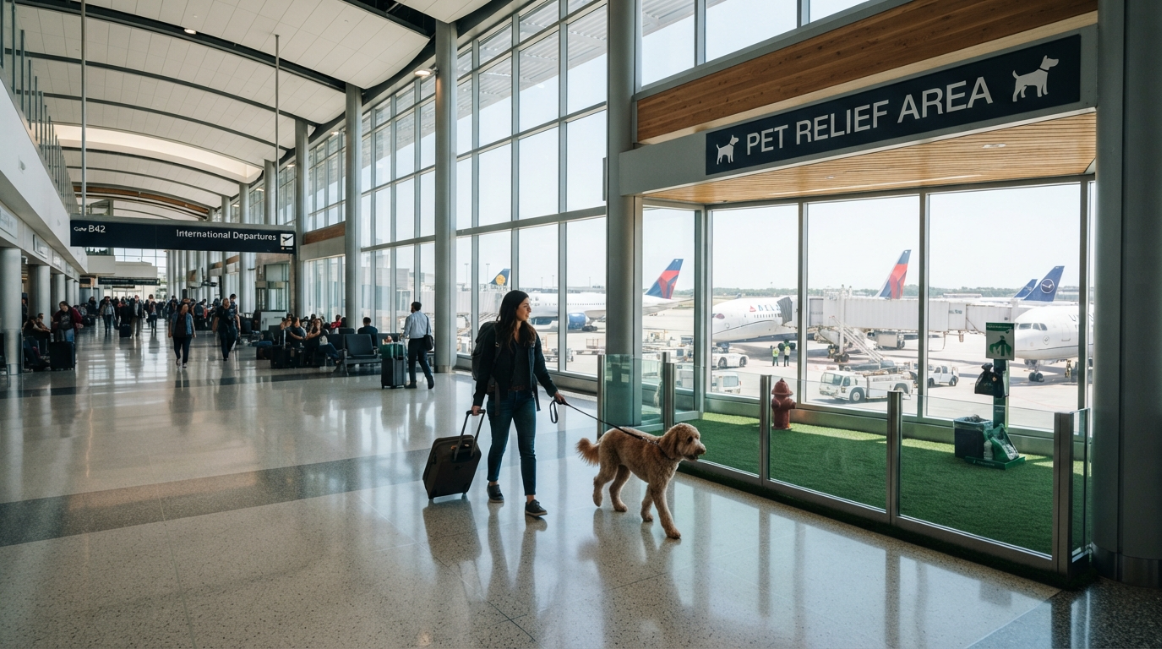
Never hand your dog to a TSA agent or force them through the luggage scanner. After clearing security, locate the nearest post-security pet relief area to give your dog one last chance to use the bathroom before boarding. These indoor pet stations feature artificial turf and rinse hoses, though carrying a patch of your own pee pad often encourages hesitant dogs to go.
Settle Inflight and Manage Food and Water
Keeping your dog settled at cruising altitude comes down to a calm routine and a cozy setup. Line the carrier floor with two absorbent puppy pads topped by an unwashed t-shirt carrying your natural scent to provide familiar comfort. Offer small ice cubes or modest sips of water from a portable squeeze bottle every few hours rather than flooding their bowl.
Avoid feeding large meals within six hours of departure to prevent nausea or upset stomachs during turbulence. Veterinary organizations strongly discourage sedatives or acepromazine because pressurized cabins lower blood pressure and depress breathing. A natural calming pheromone spray applied to the carrier bedding thirty minutes prior to departure offers a much safer way to soothe nervous energy.
Clear Customs and Veterinary Inspection on Arrival
Stepping off the aircraft brings your final border control hurdle before you can leave the airport. Follow terminal signage toward customs declarations or head directly to the designated animal inspection station. Present your passport along with the endorsed health certificates, laboratory titer test results, and entry permits to the border veterinary officer.
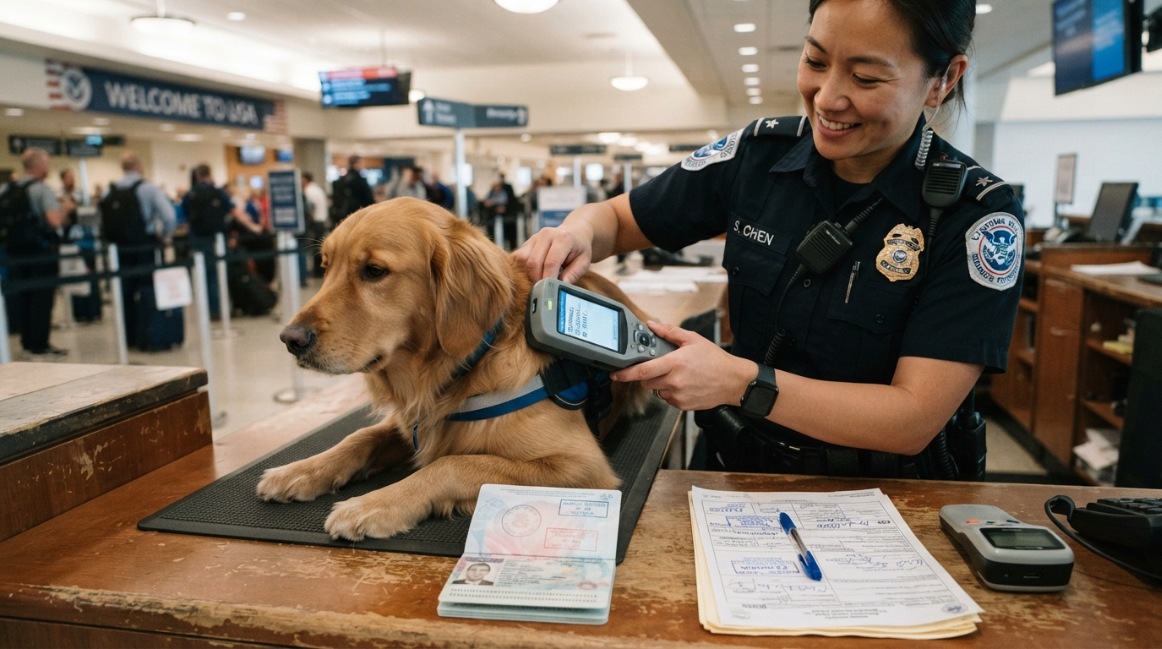
The inspector will use a universal microchip scanner to read the chip between your dog’s shoulder blades and cross-check the number against your paperwork. Once the officer verifies the records and stamps your customs clearance documentation, your dog is officially cleared for entry. Step outside into the fresh air, clip on a secure leash, and let your dog stretch their legs in their new country.
Frequently Asked Questions
Can I give my dog sedatives for an international flight?
Veterinarians and major airlines strictly discourage prescription sedatives or tranquilizers for flying animals. Sedatives impair a dog’s natural ability to regulate body temperature and balance during turbulence. Cabin pressure changes can also depress respiratory systems dangerously. Stick to crate training, familiar bedding, and non-prescription calming treats instead.
What happens if my dog needs to pee during a long flight?
Line your pet’s carrier with multiple layers of high-absorbency puppy training pads before boarding. Pack extra pads, baby wipes, and sealable plastic bags in your carry-on luggage. If an accident occurs in the air, take the carrier into the airplane lavatory to swap out dirty pads and clean up cleanly.
How much does it cost to fly internationally with a dog?
Flying internationally with a dog typically costs between four hundred and twelve hundred dollars total. This expense includes USDA-accredited vet exams, laboratory rabies titers, government endorsement fees, and airline pet fees ranging from one hundred to three hundred dollars each way. Cargo bookings for large breeds often cost significantly more.
Which countries require quarantine for arriving dogs?
Island destinations including Australia, New Zealand, Japan, and Singapore enforce strict quarantine periods unless you fulfill extensive blood testing and paperwork requirements months prior. Most European nations, the United States, and Canada do not require quarantine for healthy domestic dogs arriving with valid, complete veterinary records and ISO microchips.
Can large dogs fly in the airplane cabin internationally?
Large dogs cannot fly in passenger cabins on commercial international flights unless they are fully certified, task-trained service animals. Pets exceeding sixteen to twenty pounds must travel as manifest cargo or checked excess baggage inside temperature-regulated, pressurized aircraft holds built specifically to transport live animals safely.
Conclusion
Taking your four-legged companion across borders requires serious paperwork discipline, but watching them sniff new corners of the world makes every ounce of prep work worth it. Stay organized with your veterinary deadlines, remain calm during travel checkpoints, and reward your brave pup with plenty of treats along the journey. Where are you and your dog planning to fly next?
1 thought on “How to Fly Internationally with a Dog”